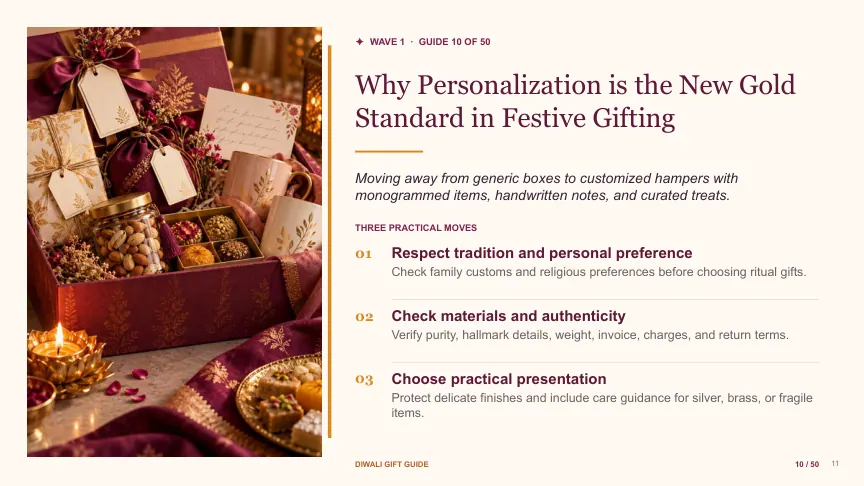
Personalization means remembering a person's interests, not printing their name on every object. A well-chosen small detail makes a hamper feel individually prepared.
At a glance: Moving away from generic boxes to customized hampers with monogrammed items, handwritten notes, and curated treats.
What to consider before you choose
Learn whether the person prefers tea, savory snacks, books or home decor. Select one anchor gift and one small complement; leave out items that do not match their needs.
A strong choice starts with the person receiving it: their interests, household routine, cultural preferences, delivery circumstances and your comfortable spending limit. Use the source slide as inspiration, then personalize the final decision rather than treating any idea as mandatory.
How to put the gift together
A monogrammed tag, a favorite regional flavor or a short message can be enough. Check spelling before printing and confirm that any customized order can be returned or corrected.
Before committing, compare at least two suitable options for quality, practicality and total cost. Check how the gift will arrive and whether a simple handwritten greeting would make it more meaningful.
Details and mistakes worth avoiding
Highly personalized gifts may be nonreturnable and difficult to re-gift. Avoid including religious items when you are unsure of the recipient's practice.
Keep the recipient's convenience in mind. A gift that needs difficult storage, complex setup, uncomfortable reciprocation or uncertain delivery may create more work than joy. When you are unsure, ask politely or choose a flexible alternative.
One thoughtful gifting example
For a tea enthusiast, a preferred loose-leaf blend, reusable infuser and note about shared memories can form a cohesive hamper.
Add a brief message about the reason you chose it. That personal connection is often what makes the present memorable long after Diwali.
Three practical moves from the original slide
Preserved from slide 11 of the supplied presentation. These are the slide's general guiding points; the article above adapts them to this specific topic.
- Respect tradition and personal preferenceCheck family customs and religious preferences before choosing ritual gifts.
- Check materials and authenticityVerify purity, hallmark details, weight, invoice, charges, and return terms.
- Choose practical presentationProtect delicate finishes and include care guidance for silver, brass, or fragile items.
Final thought
The right present does not need to be the most expensive or fashionable one. Take the ideas above as a starting point, respect the recipient's priorities and make the greeting genuine.
Editorial note: This article expands the original presentation topic with practical, general guidance. Product suitability, regional customs, legal requirements and availability should be checked for your circumstances. Source artwork remains credited to the supplied Diwali Gift Guide presentation.