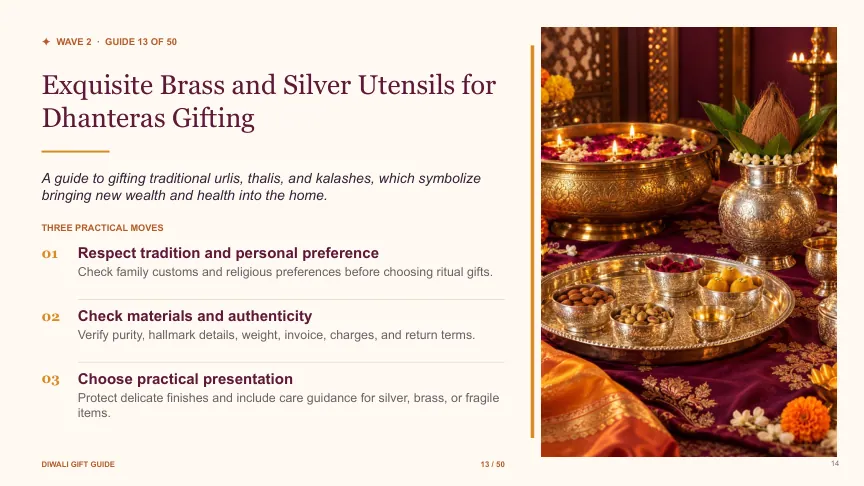
Brass and silver utensils combine festive symbolism with functional home decor. A beautiful urli, thali or kalash should also be practical to clean, store and use.
At a glance: A guide to gifting traditional urlis, thalis, and kalashes, which symbolize bringing new wealth and health into the home.
What to consider before you choose
Check what the recipient already owns and whether they prefer decorative pieces or utensils for rituals. Compare material, thickness, finish and size in person when possible.
A strong choice starts with the person receiving it: their interests, household routine, cultural preferences, delivery circumstances and your comfortable spending limit. Use the source slide as inspiration, then personalize the final decision rather than treating any idea as mandatory.
How to put the gift together
Inspect seams, edges and stability. If an item will contact food or water, ask about its suitability and care needs; include a simple cleaning guide.
Before committing, compare at least two suitable options for quality, practicality and total cost. Check how the gift will arrive and whether a simple handwritten greeting would make it more meaningful.
Details and mistakes worth avoiding
Avoid assuming every gold-colored surface is brass or that silver-colored items contain silver. Ask about plating and base metal before paying.
Keep the recipient's convenience in mind. A gift that needs difficult storage, complex setup, uncomfortable reciprocation or uncertain delivery may create more work than joy. When you are unsure, ask politely or choose a flexible alternative.
One thoughtful gifting example
A sturdy small brass urli for floating flowers can be a flexible gift for a new home with limited storage.
Add a brief message about the reason you chose it. That personal connection is often what makes the present memorable long after Diwali.
Three practical moves from the original slide
Preserved from slide 14 of the supplied presentation. These are the slide's general guiding points; the article above adapts them to this specific topic.
- Respect tradition and personal preferenceCheck family customs and religious preferences before choosing ritual gifts.
- Check materials and authenticityVerify purity, hallmark details, weight, invoice, charges, and return terms.
- Choose practical presentationProtect delicate finishes and include care guidance for silver, brass, or fragile items.
Final thought
The right present does not need to be the most expensive or fashionable one. Take the ideas above as a starting point, respect the recipient's priorities and make the greeting genuine.
Editorial note: This article expands the original presentation topic with practical, general guidance. Product suitability, regional customs, legal requirements and availability should be checked for your circumstances. Source artwork remains credited to the supplied Diwali Gift Guide presentation.