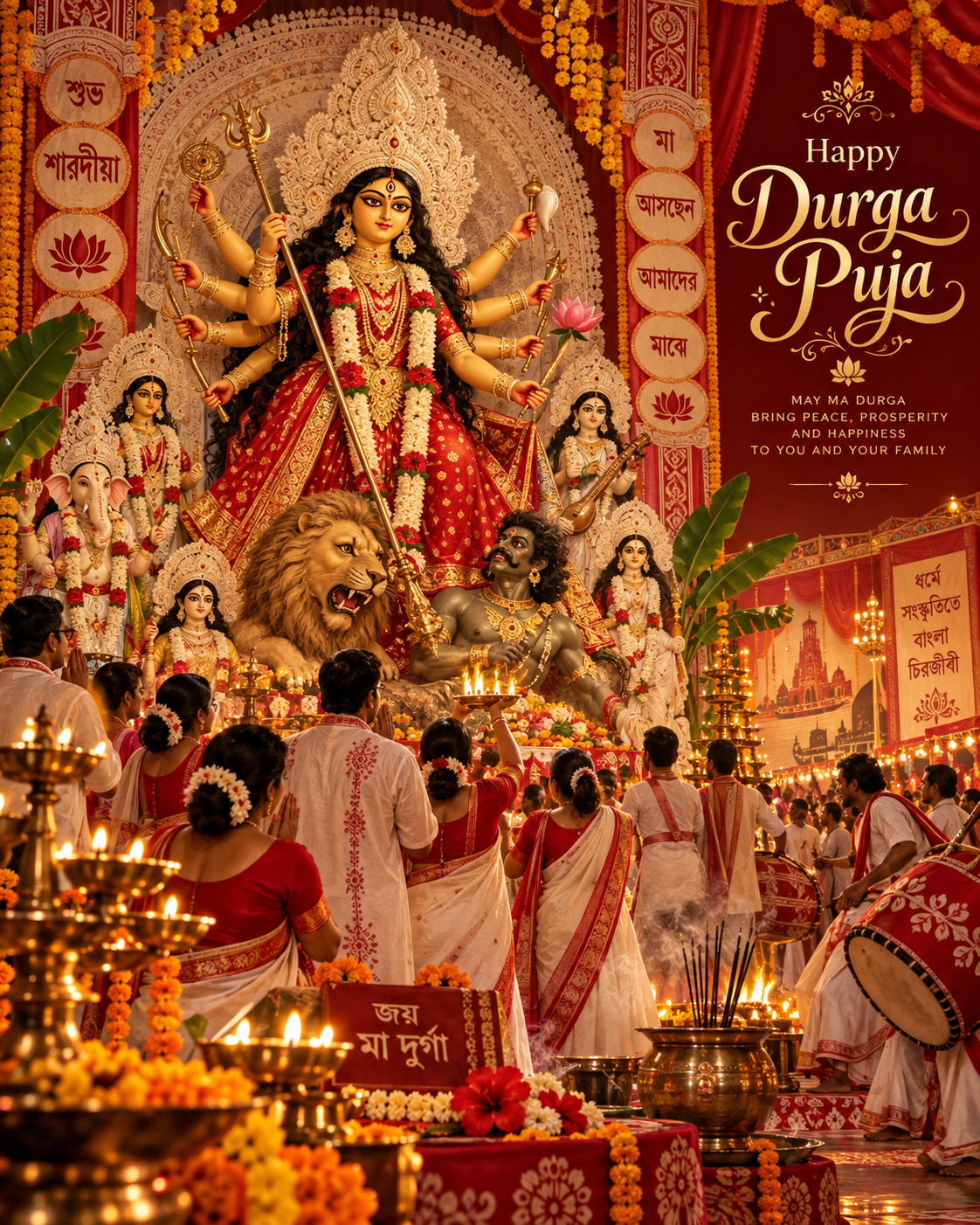
What “intangible heritage” emphasizes
The phrase emphasizes living practices such as skills, rituals, performance, community memory, and shared cultural participation, rather than focusing on a single monument or object.
The framing is well-suited to Durga Puja as the festival thrives on the collective efforts of artists, priests, organizers, performers, cooks, craftspeople, and visitors.
Visibility for makers
Acknowledgment can bring awareness to idol makers, decorative artists, street crews, musicians, and other workers whose efforts may go unnoticed once the completed pandal takes center stage.
There is potential to share in-depth narratives about the festival's creators and the intergenerational transfer of knowledge.
Tourism and pressure
Increased visibility can attract more visitors, generate commissions and create economic opportunities. However, it may also lead to overcrowding, commercialization, and the need to continually increase the size of events.
Preserving heritage demands a delicate balance: fostering growth in celebration while safeguarding craft traditions, local communities, and the integrity of rituals.
What responsible appreciation looks like
Guests are encouraged to familiarize themselves with the craft names, acknowledge the creators, adhere to designated areas, and show support for local artisans. Event planners should focus on documenting the creation process in addition to the finished product.
The most powerful aspect of recognition is its ability to sustain living traditions and ensure their relevance for the communities that uphold them.