Understanding the aarti
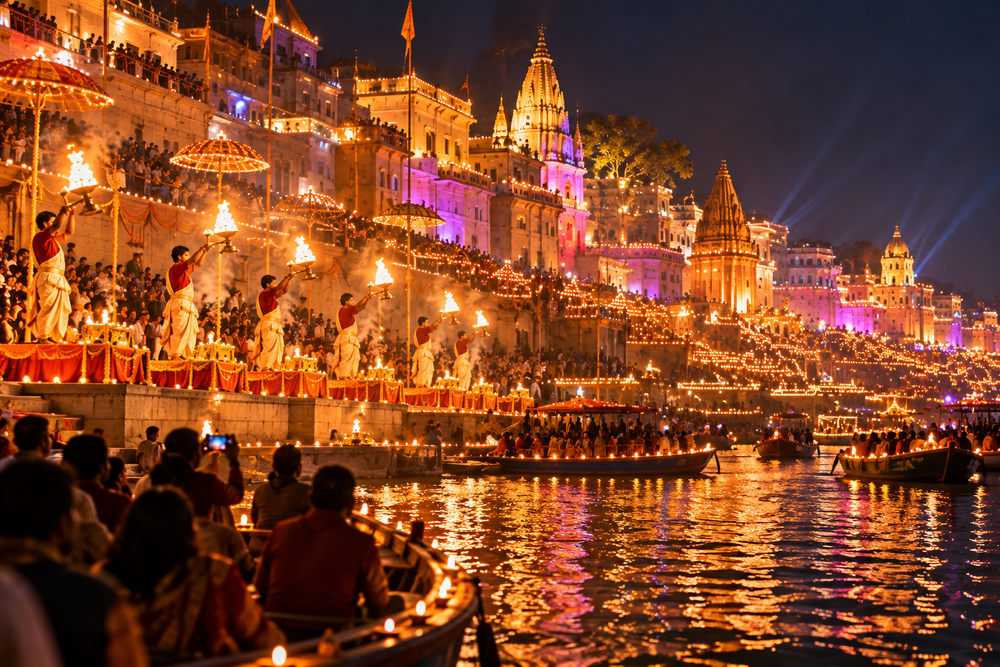
Ganga Aarti is a daily ritual in Varanasi, not an event invented for Dev Deepawali. On the full-moon festival, the surrounding riverfront lights and visiting crowds give it an extraordinary atmosphere. Large, multi-tiered ceremonial lamps make the ritual visually compelling, but their religious meaning rests in offering light, sound, and reverence to the river.
Choosing a suitable viewing place
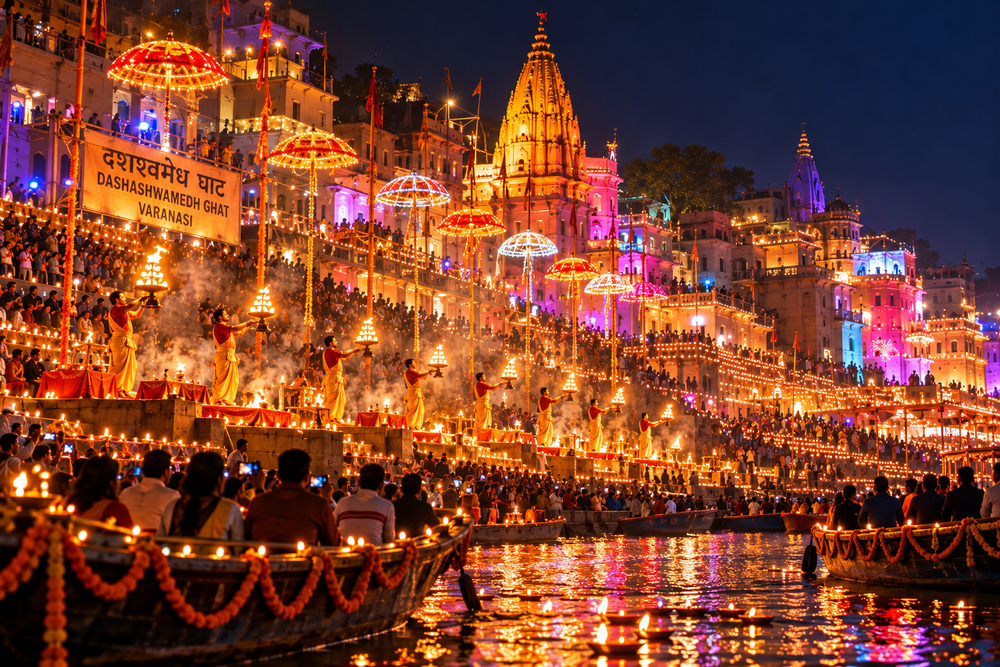
Front-row access is limited, and standing locations can change with security barriers and local arrangements. Avoid following anyone who promises unrestricted entry or a guaranteed front-row view without verified authorization. Some visitors prefer watching from the side, from a formally permitted platform, or through a licensed boat operator. The aarti schedule for festival day must be confirmed close to the event: ordinary weekday timings cannot be assumed.
Before you go
- Confirm the official entry system and any reservation requirements from local organizers.
- Arrive well in advance; security screening, queues, and one-way routes may slow entry.
- Follow photography requests, remove footwear where required, and do not block worshippers.
- Decide a post-aarti meeting point with your group in case mobile service becomes unreliable.
Common question
Is Dashashwamedh the only place to see an aarti? No. Other ghats have their own prayer activities. Dashashwamedh is especially well known, but a quieter setting may be preferable for some families.