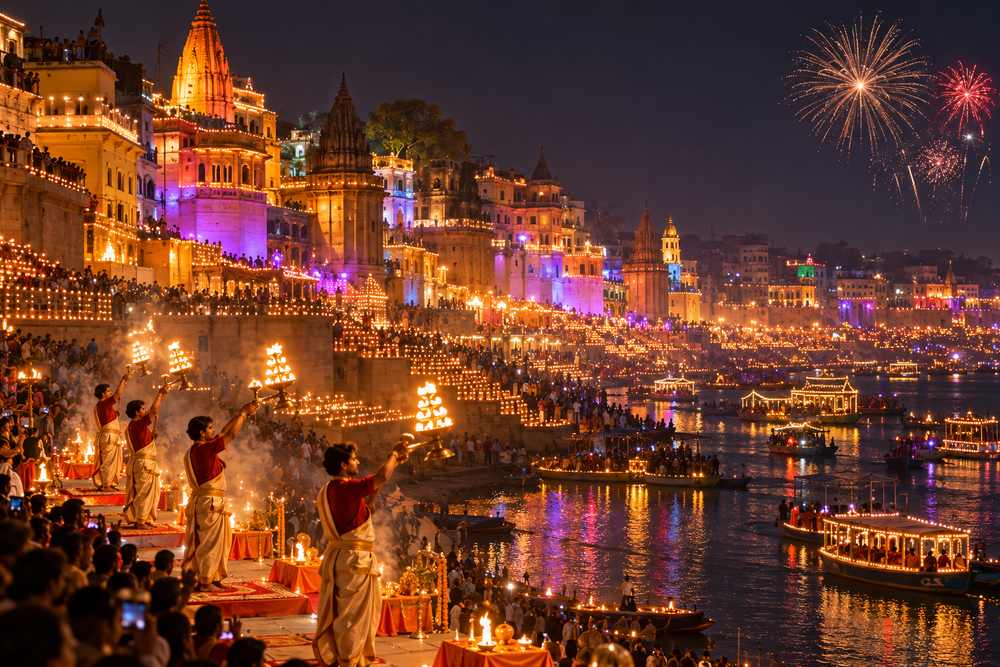
Why is it called the Diwali of the gods?
In devotional tradition, the deities are believed to descend to Kashi to celebrate Lord Shiva's victory over the forces represented by Tripurasura. The name joins dev (divine beings) with deepawali (a row of lights). Like the earlier Diwali, light is a central symbol, but the associated story, lunar date, and public rituals are different. The belief is a religious interpretation, not a literal historical claim about divine visitors.
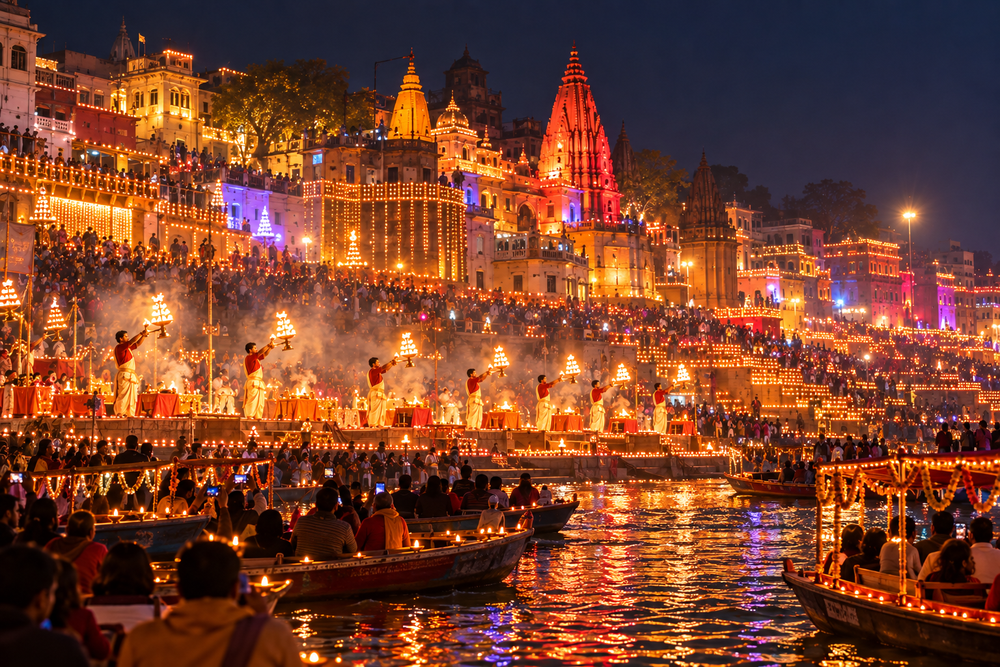
What happens on Kartik Purnima?
Before dawn, some devotees take a ritual bath known as Kartik snan. During the day, priests, resident groups, and volunteers prepare clay lamps along the ghats. After sunset, worshippers light them and attend prayers, creating a striking reflection across the river. Dev Deepawali in Varanasi in 2026 falls on Tuesday, November 24. The annual official program, access routes, and boat rules can change, so travelers should check local announcements.
A simple way to participate
- Offer a prayer at home or at a temple, then light a small number of safe, supervised diyas.
- If visiting the river, stay on designated paths and avoid crowd bottlenecks near stairways.
- Respect people who are bathing, praying, or making offerings; ask before taking close-up photos.
- Keep disposable containers, plastic, and lamp residues out of the Ganga.
Common question
Is Dev Deepawali always exactly 15 days after Diwali? It is associated with the full moon of Kartik, commonly described as around fifteen days after the new-moon Diwali. The precise interval and Gregorian date depend on the lunar calendar and local observance.