Difference in story and date
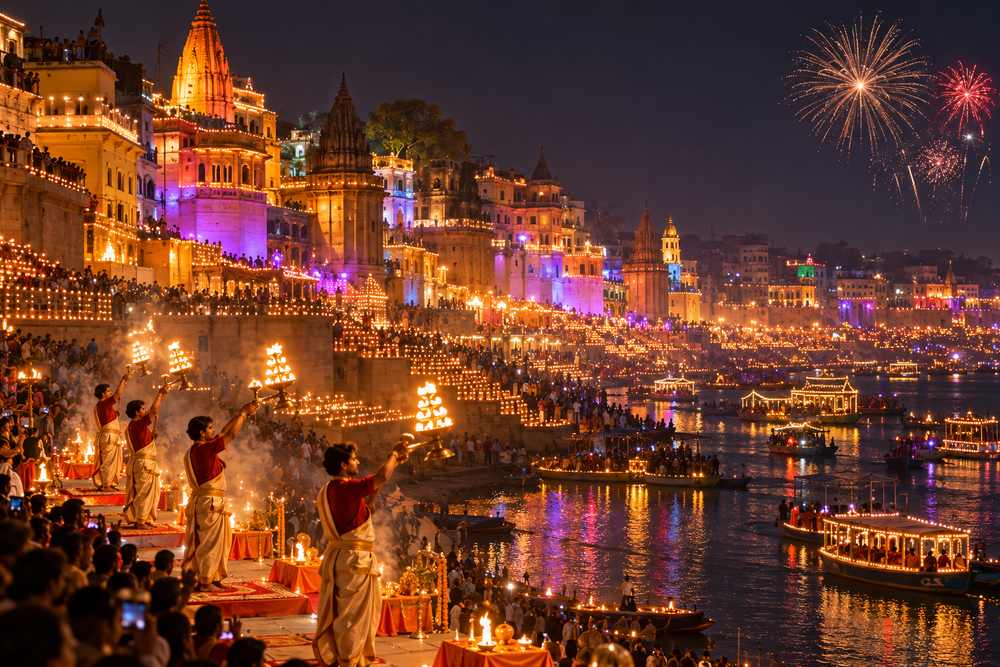
Diwali usually occurs on the new-moon night (amavasya) of the Kartik season and has multiple regional meanings. One widely known North Indian story celebrates Lord Rama's return to Ayodhya; Lakshmi Puja is also central in many households. Dev Deepawali takes place on Kartik Purnima, roughly a fortnight later, and is especially associated with Shiva's triumph over Tripura. In Varanasi, the ghats become the focus of a citywide lamp-lighting celebration.
Difference in how people celebrate
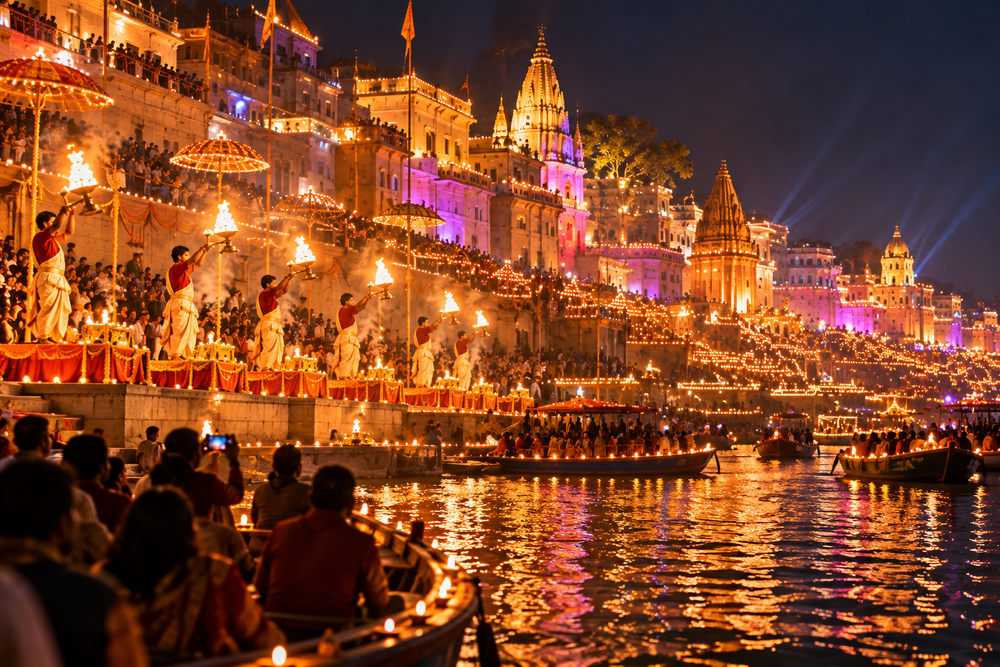
Diwali often emphasizes home cleaning, family gatherings, sweets, rangoli, Lakshmi worship, and lamps at doorways. Dev Deepawali places greater visual emphasis on collective riverside worship, deep daan, Ganga Aarti, and full-moon observances. Yet there is overlap: both value prayer, giving, devotion, and community celebration. Customs vary widely, and neither day belongs exclusively to one deity.
At-a-glance comparison
- Lunar phase: Diwali is linked to new moon; Dev Deepawali to Kartik's full moon.
- Signature Varanasi scene: illuminated ghats and collective Ganga Aarti on Dev Deepawali.
- Common home practice: safe diya lighting, prayer, sharing food, and charity on either occasion.
- 2026 dates: Diwali is observed November 8 in much of India; Dev Deepawali in Varanasi is November 24.
Common question
Should I celebrate both? You may, if that suits your family tradition. Many families celebrate Diwali at home and mark Kartik Purnima later with a simple diya, temple visit, or act of giving.