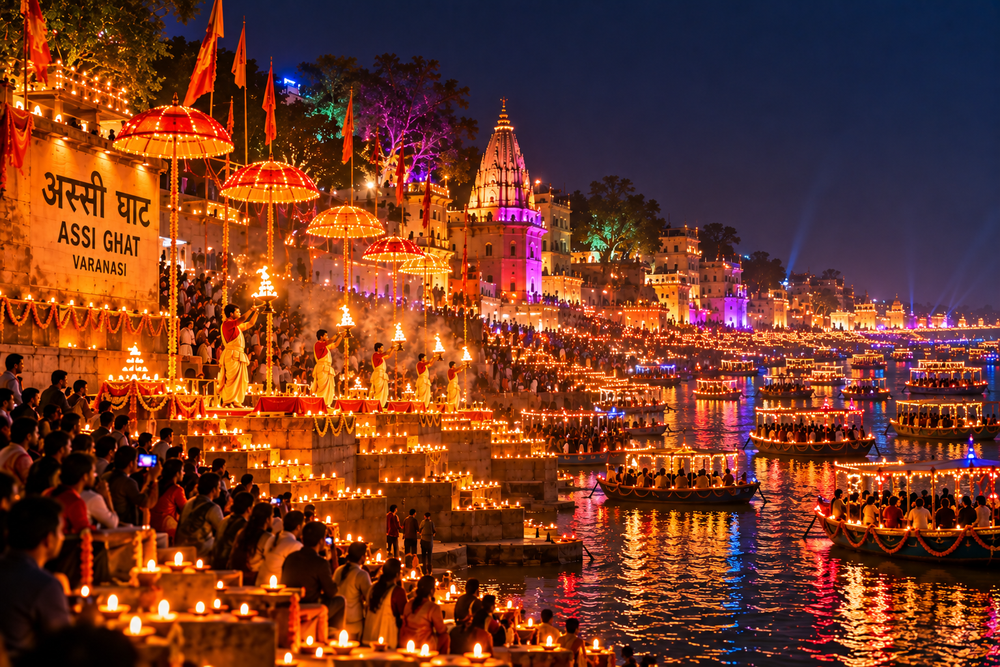
Why Kashi matters
Kashi, an ancient name for Varanasi, is deeply connected with Shiva in Hindu tradition. Devotees often regard the river here as a place of spiritual purification and remembrance. Folklore surrounding Dev Deepawali says divine beings come to the city and bathe in the Ganga. This belief helps explain why snan and lamp offerings are meaningful to worshippers. It should be presented respectfully as sacred belief rather than scientific fact.
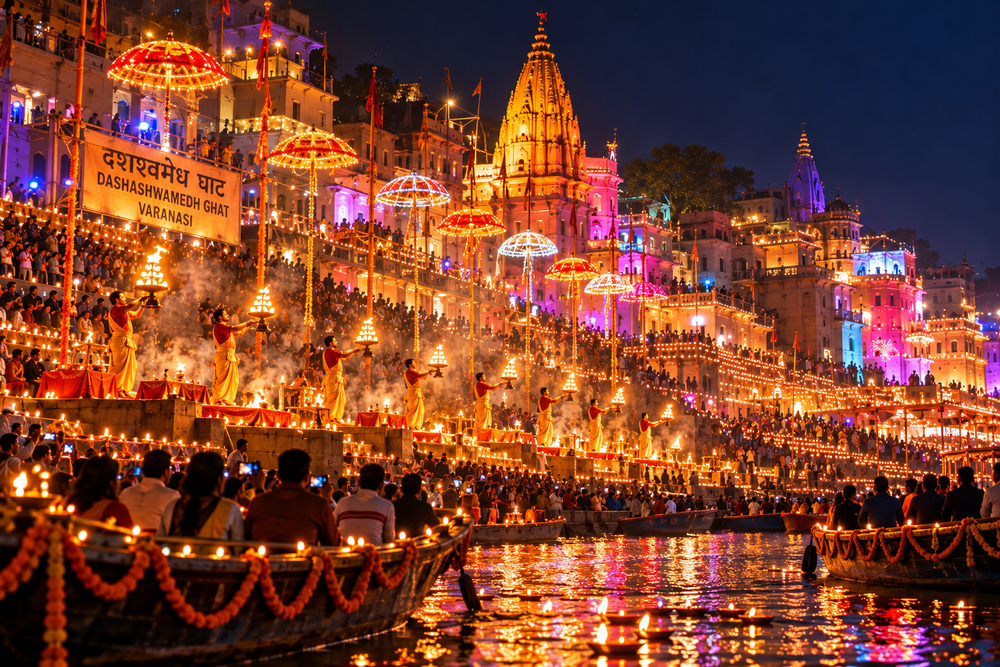
The riverfront as a collective shrine
Unlike a celebration held inside a single complex, Dev Deepawali unfolds over many ghats. Visitors see prayers, families, priests, musicians, volunteers, and boats sharing the same space. The river offers beautiful reflections, but also practical limits: currents, low visibility, and narrow access routes mean riverbank safety must take priority over photography or finding the perfect viewpoint.
Experience the river responsibly
- Choose one or two ghats to visit rather than racing through the entire waterfront.
- Stay clear of wet steps, open flames, and restricted bathing or boating zones.
- Do not throw flowers, foil, plastic, or fuel-filled containers into the water.
- Observe rituals quietly and support local caretakers or cleanup initiatives.
Common question
Must devotees bathe in the Ganga to observe Dev Deepawali? No. Families unable to travel can pray, light lamps safely, and practice charity at home; religious observance varies by community and individual circumstances.