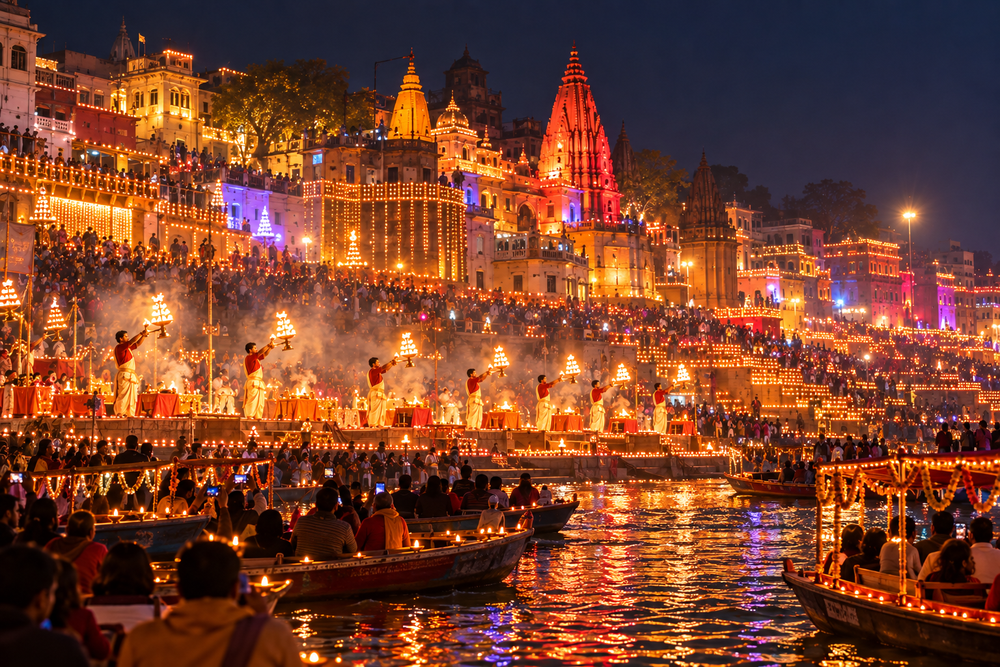
The spiritual meaning of a lamp
A lit diya can represent the movement from ignorance to understanding and from fear to hope. Some traditions associate lamp offerings with remembrance of ancestors and prayers for liberation (moksha), though beliefs differ across families. The central gesture is offering light with humility; the size or cost of the lamp does not determine the sincerity of devotion.
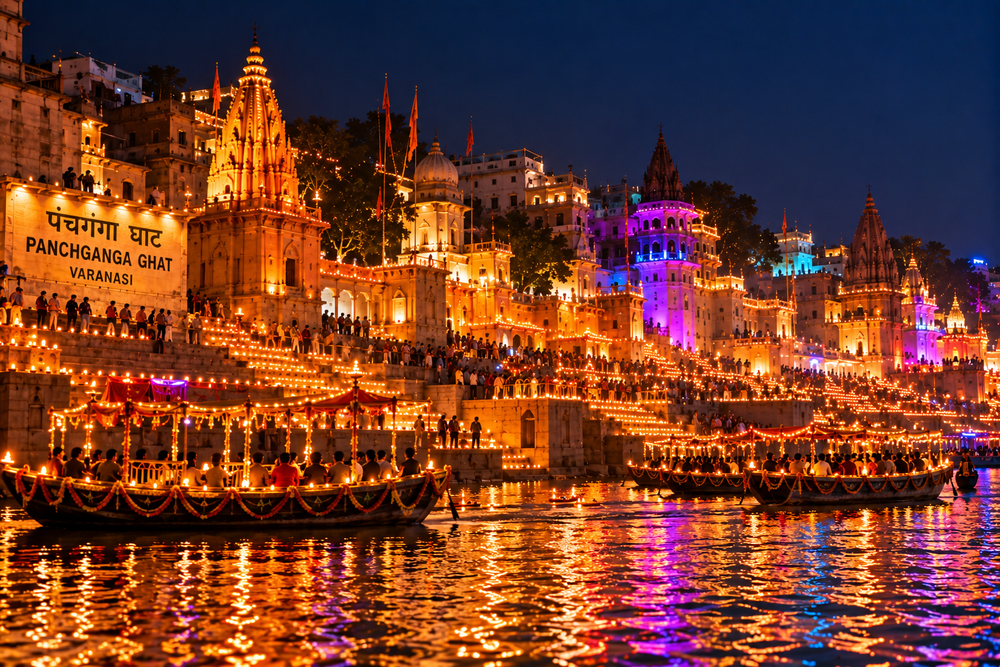
How deep daan is practiced
At a ghat, devotees may arrange clay diyas on a safe stone surface and light them during evening prayer. A few communities float symbolic offerings, but river protection matters: plastics, thermocol, paints, and metal foils should not enter the water. A lamp placed securely on land can carry the same personal meaning without creating debris or fire risks in the current.
Safe deep daan checklist
- Choose a sheltered, nonflammable surface away from walking routes.
- Use small quantities of fuel and never leave a burning lamp unattended.
- Keep children and loose clothing clear of flames; carry a reusable torch for dark steps.
- Collect cooled clay, wick remains, and containers instead of sweeping them into the river.
Common question
Must a diya float on the Ganga to count as deep daan? No. Many devotees make lamp offerings on steps, temple platforms, or at home. Where floating offerings are permitted, follow local environmental and safety rules.