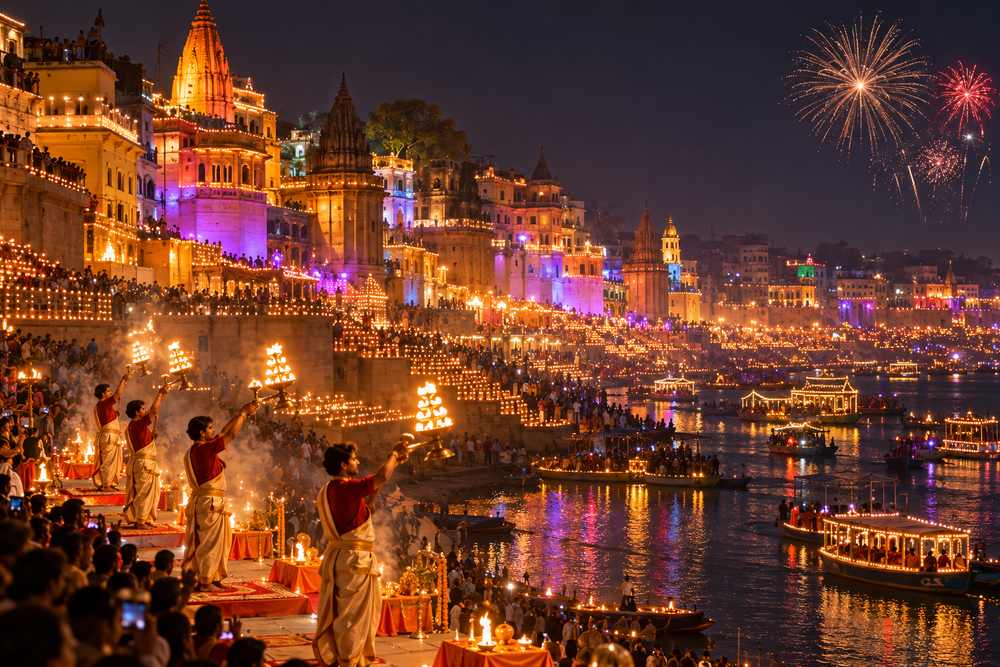
What is Dev Deepawali? The Diwali of the Gods Explained
An introduction to the festival celebrated 15 days after Diwali on Kartik Purnima, when Hindu gods are believed to descend to Earth.
Read article →Experience the stories, sacred ghats, Ganga Aarti and human traditions behind Dev Deepawali. Explore 50 original illustrated articles, from a first visit to Varanasi to a thoughtful celebration at home.
Religious meaning, architecture, travel logistics, recipes, conservation and community perspectives: together in one navigable collection.
50 of 50 articles
No matching articles. Try a different keyword or choose “All 50”.
Discover the stories, deities and full-moon meaning behind the festival.
An introduction to the festival celebrated 15 days after Diwali on Kartik Purnima, when Hindu gods are believed to descend to Earth.
Read article →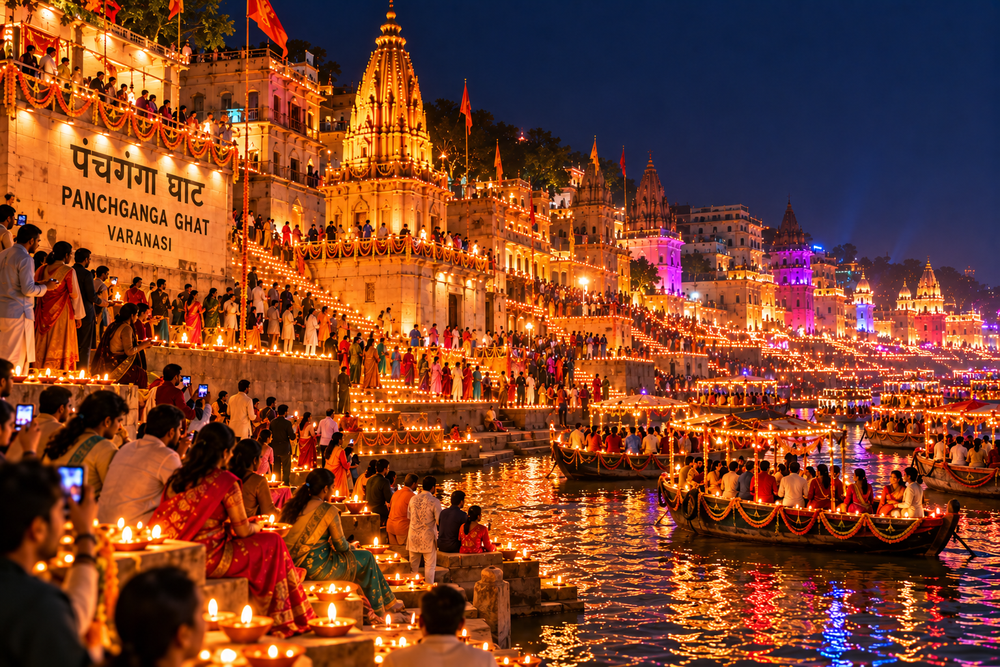
Exploring the core mythology of Dev Deepawali, detailing how Lord Shiva destroyed the three demon cities of Tripura to save the universe.
Read article →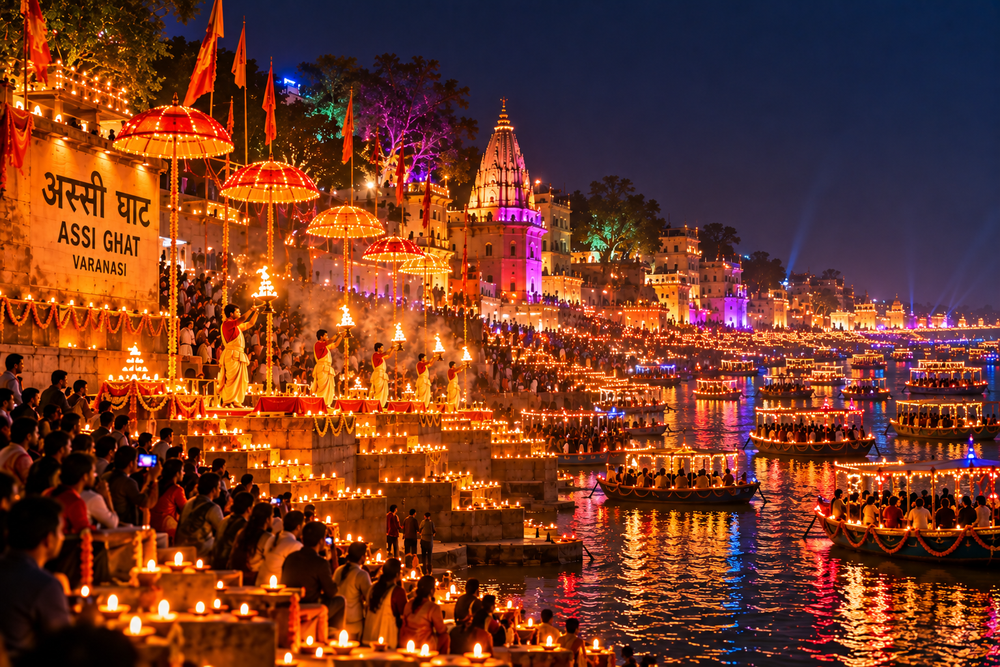
The astrological and spiritual significance of the Kartik month and why this specific full moon is considered incredibly auspicious.
Read article →Clarifying the distinction between celebrating Lord Rama's return to Ayodhya (Diwali) and the gods celebrating Shiva's victory in Kashi (Dev Deepawali).
Read article →Why the city of Kashi (Varanasi) is the focal point of this festival, and the belief that gods bathe in the Ganges on this night.
Read article →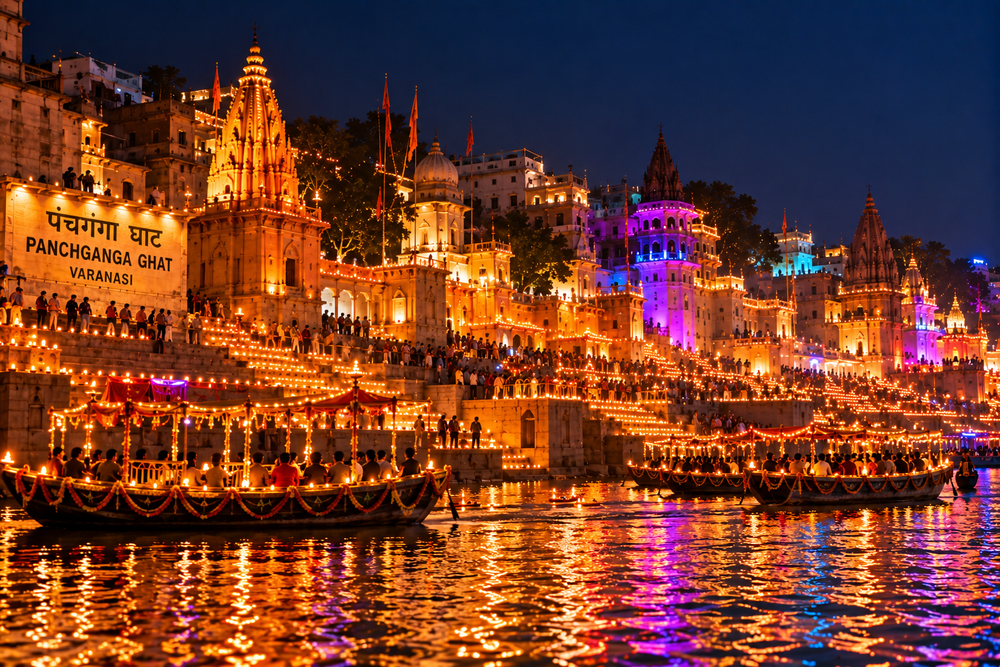
Exploring the lesser-known connection of Kartik Purnima to the birth of Lord Vishnu's first avatar, the giant fish (Matsya).
Read article →How Dev Deepawali marks the official end of the Tulsi Vivah rituals, signaling the beginning of the Hindu wedding season.
Read article →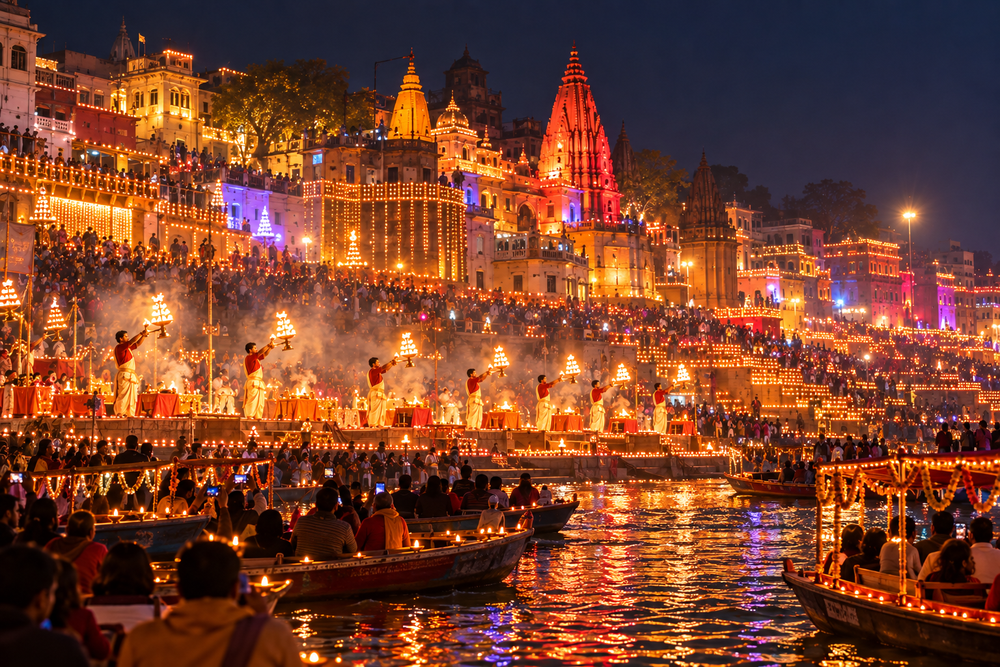
The spiritual merit of donating oil lamps to the sacred river, symbolizing the guiding of ancestors to liberation (Moksha).
Read article →Why millions of pilgrims brave the freezing early morning temperatures to take a dip in the Ganges before sunrise.
Read article →Highlighting how Kartik Purnima coincides with Guru Nanak Jayanti (Gurpurab) and the Jain festival celebrating Lord Mahavira.
Read article →Explore the illuminated riverfront, ceremonies, boating, sound and photography.
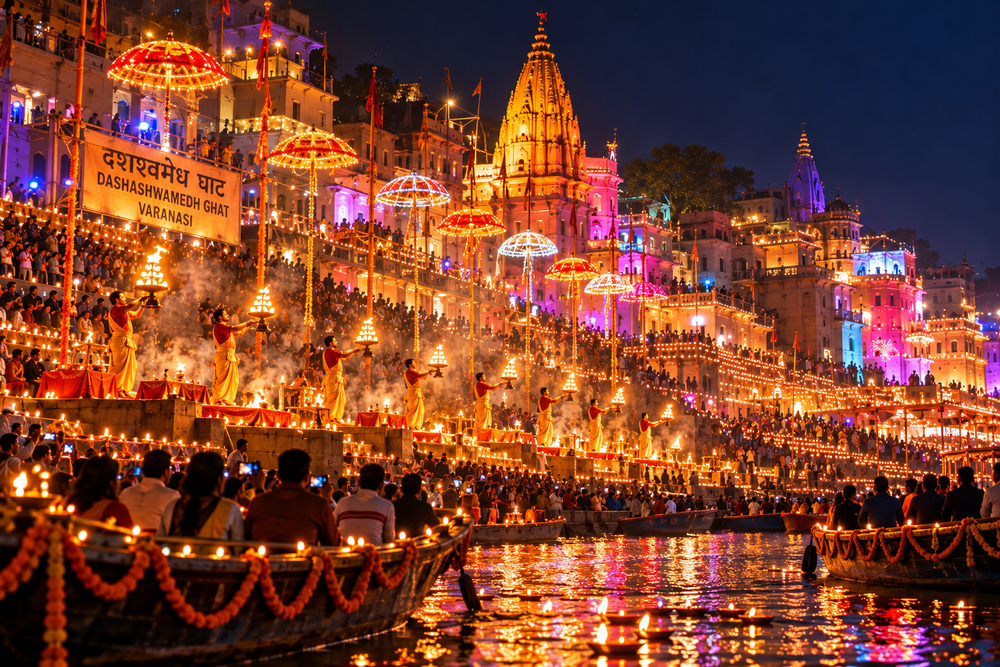
A visual guide to the breathtaking sight of over a million earthen diyas illuminating all 84 continuous ghats of the city.
Read article →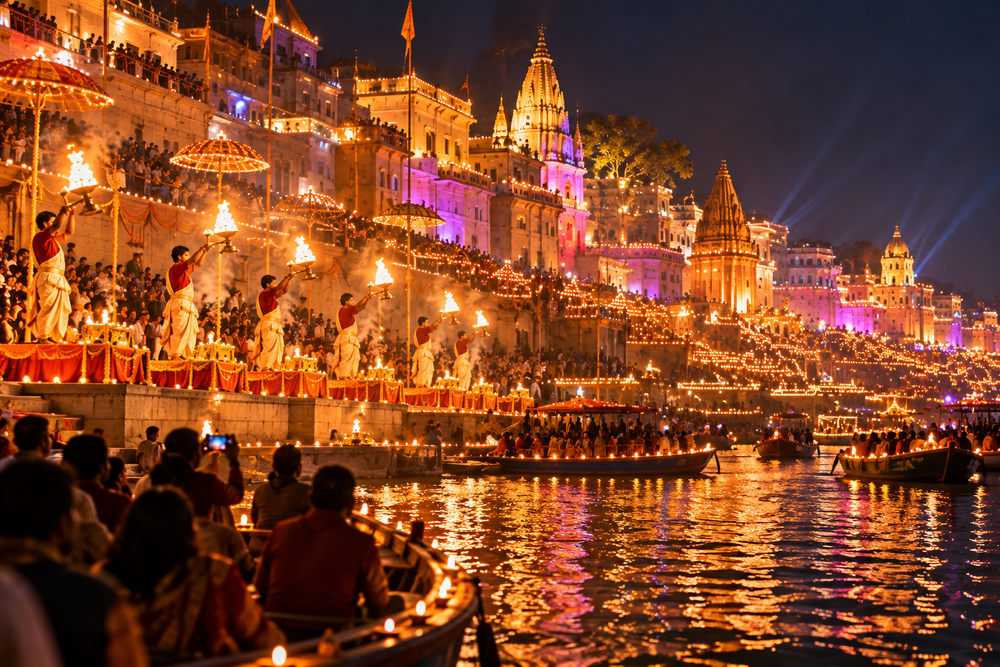
What to expect at the most famous ghat, featuring the elaborate, synchronized, multi-tiered Ganga Aarti performed by priests.
Read article →A walking and boating guide to exploring the 7-kilometer crescent-shaped stretch of illuminated stone steps.
Read article →How the Ganga Seva Nidhi organizes the laying of wreaths and lighting of lamps at the Amar Jawan Jyoti replica to honor Indian soldiers.
Read article →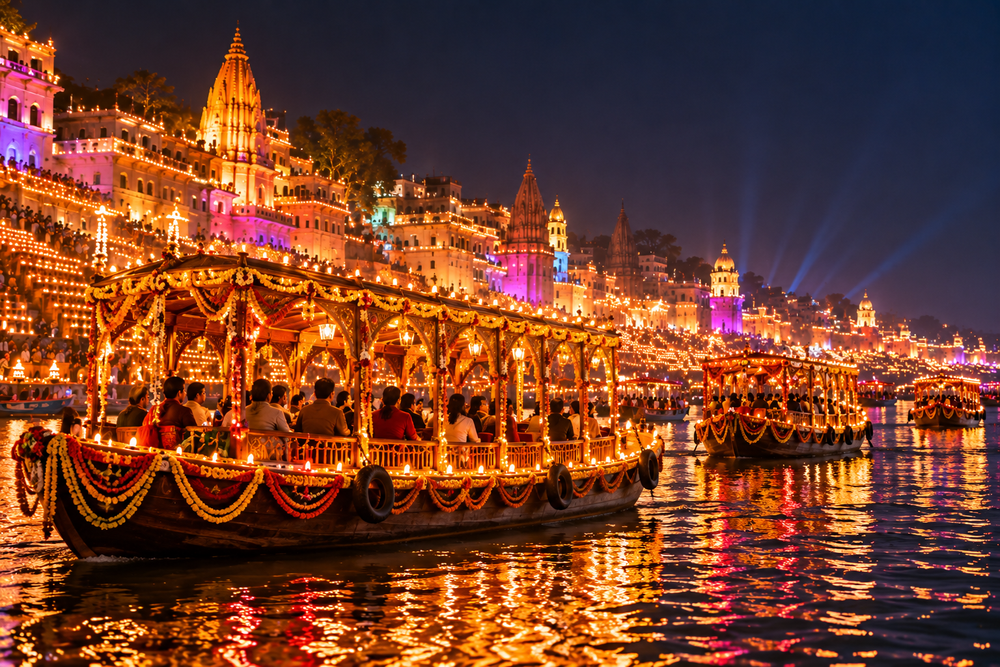
Logistics for booking a traditional wooden rowboat or a motorboat to witness the illuminated city from the middle of the river.
Read article →Comparing the serene, spiritual chanting of Subah-e-Banaras with the chaotic, dazzling spectacle of the evening illuminations.
Read article →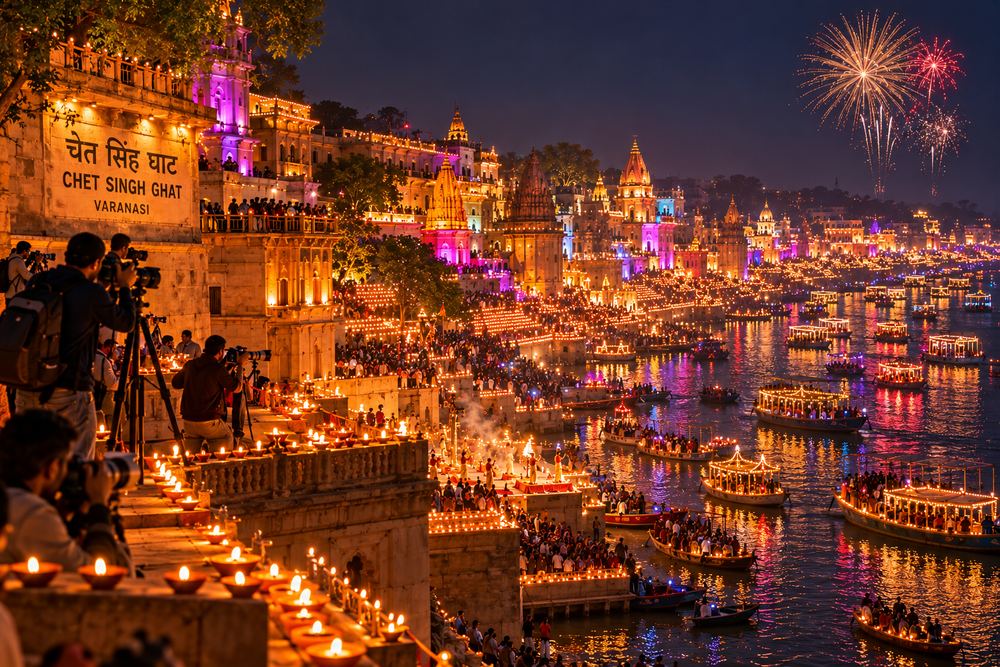
Technical advice for photographers on managing low-light conditions, long exposures, and capturing the bokeh of floating lamps.
Read article →How the local tourism board has integrated modern 3D projection mapping and laser shows on the Chet Singh Ghat fortress.
Read article →An auditory exploration of the festival, from the rhythmic ringing of massive brass bells to the echoing Vedic mantras.
Read article →Behind the scenes with the thousands of local students, NGOs, and residents who spend the entire day painstakingly arranging and pouring oil.
Read article →Plan transport, accommodation, temples, food and a safe three-day stay.
A structured travel guide for visitors to Varanasi, ensuring they see Sarnath, the Kashi Vishwanath Temple, and the ghats efficiently.
Read article →Why you need to book a room 6 months in advance, and the best heritage havelis located directly on the ghats for an unobstructed view.
Read article →Crucial advice on surviving the extreme crowd density, avoiding stampedes, and keeping your valuables safe in the narrow alleyways.
Read article →Understanding the city's vehicular bans during the festival, and why walking or taking a cycle rickshaw is the only way to get around.
Read article →Packing advice for the November weather in UP, focusing on comfortable walking shoes and warm shawls for the freezing river breeze.
Read article →A culinary guide to Tamatar Chaat, crispy Jalebis, and the famous Malaiyo (dew-kissed milk foam) available during the winter.
Read article →How the newly renovated, massive temple corridor handles the influx of millions of pilgrims on Kartik Purnima.
Read article →Where to buy authentic silk sarees, wooden toys, and brass puja items as souvenirs while wandering the festive markets.
Read article →Accessibility tips for seniors, including booking private boats early and finding secure, seated viewing spots for the Aarti.
Read article →The pros and cons of having a local 'panda' or registered guide navigate the chaotic alleys and explain the history of the ghats.
Read article →Celebrate with lamps, prayers, simple prasad and regional Kartik Purnima customs.
A guide for devotees who cannot travel to Kashi, detailing how to light 11 or 21 diyas at the front door and home temple.
Read article →Recipes for traditional offerings, including Panchamrit, Kheer, and the roasted flour Panjiri favored on this day.
Read article →Drawing specific floor art patterns using flour, rice, and flowers to welcome Lord Shiva and Lord Vishnu into the home.
Read article →Rules for observing the Kartik Purnima fast, what you can eat (Phalahar), and how to break the fast after moonrise.
Read article →The significance of reciting hymns dedicated to Lord Shiva's greatness on the evening of his victory over Tripurasura.
Read article →The Vastu and spiritual reasons for specifically placing oil lamps under sacred trees to appease ancestors and deities.
Read article →How other major holy cities along the Ganges celebrate the festival with their own massive Aartis and deep daan ceremonies.
Read article →Exploring the massive gathering on the banks of the Saryu River, just weeks after the city's world-record-breaking Diwali Deepotsav.
Read article →How the festival has become a massive global showcase for Indian tourism, attracting foreign dignitaries, ambassadors, and international media.
Read article →Highlighting the matriarchal role in painting the ghats with Rangoli, preparing the cotton wicks, and leading the folk songs.
Read article →Protect the river, support artisans and boatmen, and preserve the ghats.
Addressing the ecological concerns of pouring thousands of liters of oil and burning cotton wicks directly near the river ecosystem.
Read article →The push to ban single-use plastic and synthetic thermocol floating diyas in favor of biodegradable leaf bowls (pattals) and unbaked clay.
Read article →Highlighting the massive municipal and volunteer effort required to sweep up millions of burnt clay lamps and debris the day after the festival.
Read article →How the massive demand for Dev Deepawali diyas sustains the local pottery villages, and the shift from electric wheels to traditional spinning.
Read article →Managing the haze and smog created by millions of lamps combined with North India's winter fog, and tips for asthma sufferers.
Read article →The socio-economic boom the festival provides to the traditional rowing community, and ensuring fair wages during the tourist rush.
Read article →How local startups are collecting the tons of marigold and rose petals discarded in the river to upcycle them into incense sticks and colors.
Read article →The logistical nightmare of preventing boat capsizes in the dark, crowded river, and the strict safety regulations enforced on boatmen.
Read article →How the intense heat, crowds, and wax/oil residue affect the centuries-old sandstone fortresses, and ongoing conservation efforts.
Read article →A critical look at how Varanasi can sustainably host an ever-growing number of tourists without losing the spiritual sanctity of the festival.
Read article →Nine unique supplied images, displayed in responsive resolutions. Open any image for a larger view.
Festival programs and permissions can change after publication. Use these references to verify dates, temple access and local notices.
Tradition-based interpretations are presented as beliefs; practical advice is informational, not medical or legal guidance.