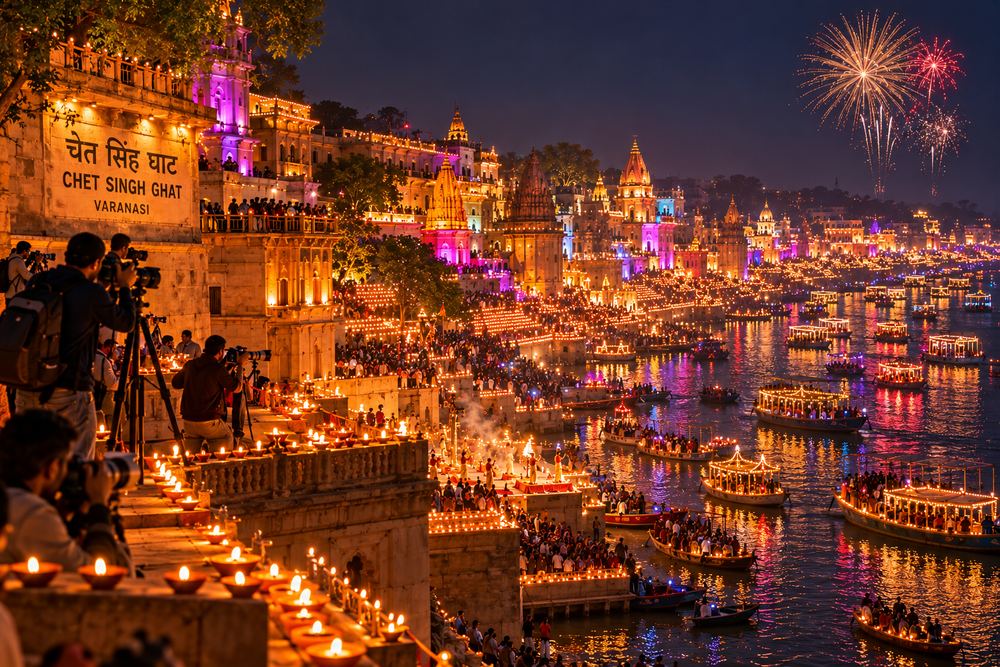
Camera settings that help
A smartphone's night mode can work well if you brace it on a safe, stationary surface. With a camera, begin with a moderately wide aperture, an ISO that gives a usable shutter speed, and exposure compensation to protect highlights. A practical starting point for handheld scenes may be around 1/125 second for moving people, while stationary architecture permits longer exposures when supported. Review the histogram rather than trusting the bright screen preview.
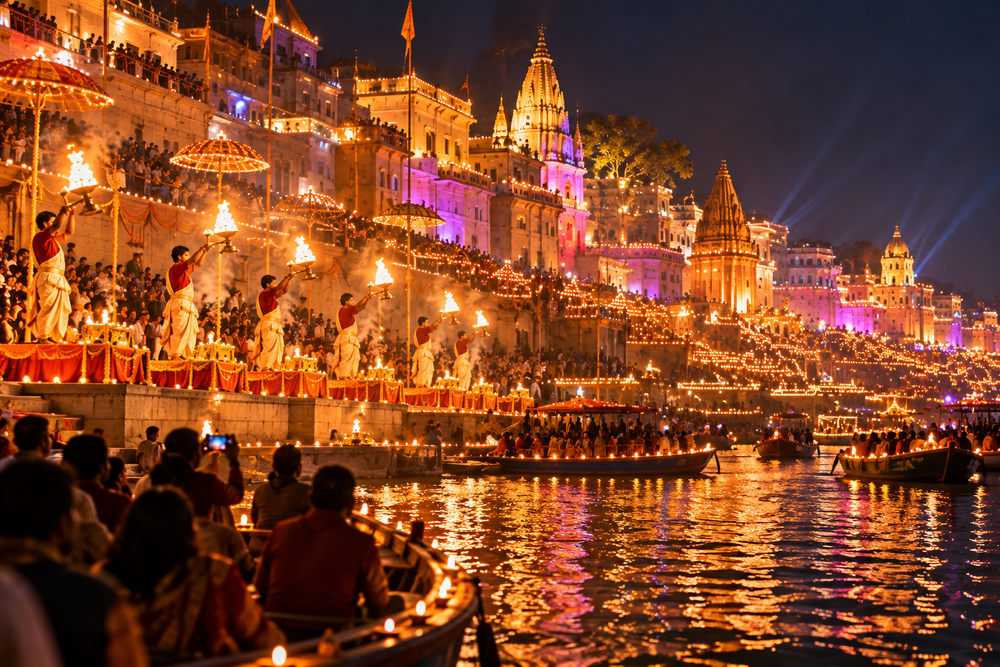
Composition and respectful practice
Use a low angle only where there is safe, dry footing. Include a portion of the stone steps to add scale; place rows of lamps as leading lines. For natural bokeh, focus on a nearby lamp with more distant lights behind it. Avoid interrupting prayers with flashes, blocking narrow access routes with tripods, or photographing people in vulnerable moments without permission. Drone use may be prohibited and requires applicable authorization.
Field checklist
- Clean lenses and bring spare batteries or a power bank.
- Decide on one safe shooting position before peak crowd time.
- Capture wide establishing views, medium details, and a few respectful close-ups.
- Protect equipment against splashes; never step backward toward the river without checking.
Common question
Do I need professional gear? No. A steady smartphone, attention to composition, and patient timing often matter more than an expensive lens.